











If you’re looking for a clear, lightweight alternative to glass, you’ve probably come across both solid polycarbonate and acrylic sheet. At first glance, the two materials can look very similar, but their properties are quite different and choosing the right one depends on what you need the sheet to do.
So, is polycarbonate better than acrylic?
For applications where impact resistance, toughness and durability are priorities, solid polycarbonate is usually the better choice. Acrylic, however, has its own advantages, particularly where maximum optical clarity, surface appearance or a wide choice of colours is important.
Let’s take a closer look at how the two materials compare.
What is solid polycarbonate?
Polycarbonate is a tough, transparent thermoplastic known for its exceptional impact resistance. It is widely used as an alternative to glass where strength and reduced weight are important.
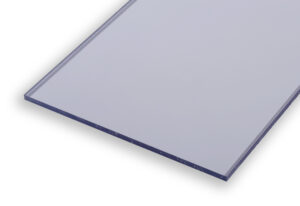
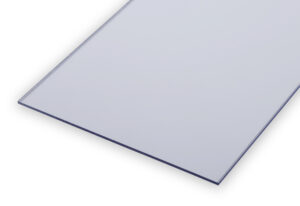
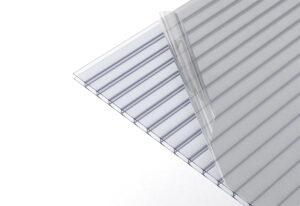
Unlike multiwall polycarbonate roofing, solid polycarbonate is a single, flat sheet with no internal flutes or channels. This gives it a glass-like appearance while retaining the toughness associated with polycarbonate.
Solid polycarbonate can be used for glazing, screens, machine guards, protective panels, windows, signage and other applications where a clear but highly impact resistant material is required.
It is also relatively easy to cut, drill and fabricate without the material being as prone to cracking as acrylic. PALRAM’s PALSUN solid polycarbonate, for example, has a typical tensile elongation at break of more than 90%, demonstrating the material’s ability to deform rather than simply fracture under stress.
What is acrylic sheet?
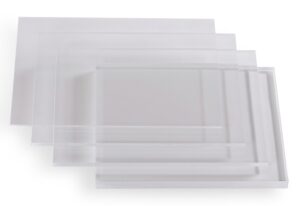
Acrylic, also known as PMMA or Perspex®, is another transparent thermoplastic. It is particularly well known for its excellent optical clarity and glass-like appearance.
Acrylic is commonly used for displays, signage, glazing, shelving, furniture, splashbacks and other applications where appearance and clarity are particularly important. Clear cast acrylic can achieve light transmission of more than 92% in a typical 3mm sheet, making it an excellent choice where maximum visual clarity is required.
Acrylic is also available in a much wider range of colours, tints, finishes and decorative options than standard clear solid polycarbonate, making it popular for design-led applications.
Solid polycarbonate vs acrylic: what is the difference?
The biggest difference comes down to impact resistance.
Both materials are considerably lighter than glass and can provide excellent clarity, but solid polycarbonate is much tougher. PALRAM states that its solid polycarbonate products offer high impact resistance and are designed to withstand demanding applications where strength and durability are important.
That makes solid polycarbonate particularly useful where the sheet could be hit, knocked or exposed to accidental impact. It is commonly used for protective glazing, safety screens, machine guards and other applications where resistance to breakage is a priority.
Acrylic, on the other hand, is harder and generally offers better resistance to everyday surface scratching. This doesn’t make it stronger overall — it simply means the two materials perform differently. Acrylic can be a suitable choice where optical clarity, surface appearance and scratch resistance are more important than high impact resistance.
At a glance
| Property | Solid Polycarbonate | Acrylic |
|---|---|---|
| Impact resistance | Excellent | Good |
| Optical clarity | Excellent | Excellent |
| Surface hardness | Good | Very good |
| Weight | Lightweight | Lightweight |
| Ease of fabrication | Excellent | Very good |
| Flexibility/toughness | Very high | Lower |
| Colour options | Good | Excellent |
| Suitable for safety glazing | Yes | Depends on application |
| Suitable for protective panels | Excellent | Suitable for lower-impact applications |
| Appearance | Glass-like | Very glass-like |
The exact performance will depend on the grade, thickness and manufacturer, so technical data should always be checked for a specific application.
Which is stronger: polycarbonate or acrylic?
Polycarbonate is significantly stronger in terms of impact resistance.
This is one of the main reasons solid polycarbonate is used for applications such as safety glazing, protective screens, machine guards and other areas where resistance to impact is important.
Rather than cracking or shattering as readily, polycarbonate can absorb considerably more impact energy and deform under load.
Acrylic is still a durable material, but it is more brittle than polycarbonate. If the sheet is likely to experience significant impact, polycarbonate is generally the safer option.
Is acrylic clearer than polycarbonate?
Generally, yes — acrylic has a slight optical advantage.
High-quality clear acrylic is exceptionally transparent and is often chosen when the appearance needs to be as close to glass as possible. Polycarbonate can also be extremely clear, but its optical properties vary between products and grades.
For a shed window or protective screens, the difference may be difficult to notice in everyday use. For display cases, retail applications or projects where optical appearance is the priority, acrylic may have the edge.
Which is better for outdoor use?
Both materials can be used outdoors, but the specific product and its UV protection are important.
Acrylic has good weathering properties and can retain its appearance outdoors. Solid polycarbonate from PALRAM is UV2 protected, making it highly suitable for exterior glazing and roofing applications. PALRAM notes that polycarbonate blocks the relevant UV spectrum while still allowing visible light to pass through.
This is why it is important not to judge a material purely by its name. The manufacturer’s specification, UV protection and intended application matter just as much as whether the sheet is acrylic or polycarbonate.
What are the main uses for solid polycarbonate?
Solid polycarbonate is particularly useful when you need a combination of clarity, low weight and high impact resistance.
Common applications include:
- Shed and workshop windows
- Protective screens and guards
- Safety glazing
- Machine guarding
- Internal partitions
- Architectural glazing
- Skylights and roof glazing
- Protective panels
- Signage
- Vehicle and transportation glazing
- DIY and fabrication projects
Its ability to be drilled and fabricated without cracking as readily as more brittle plastics also makes it a practical material for many DIY and commercial projects.
What is acrylic best used for?
Acrylic is often the preferred option when appearance, clarity or decorative choice is more important than extreme impact resistance.
Typical applications include:
- Display cases and covers
- Retail displays
- Signage
- Shelving
- Furniture
- Splashbacks
- Decorative panels
- Windows and glazing
- Illuminated signs and light diffusers
- Aquariums and display applications
Its excellent clarity and broad range of colours and finishes make acrylic particularly popular for visual and design-focused applications.
Which should you choose?
There isn’t one material that is automatically better for every project.
If strength and impact resistance are your priority, we’d generally recommend looking at solid polycarbonate first. It is an excellent choice where the sheet needs to withstand knocks, accidental impacts or demanding environments.
If your priority is maximum optical clarity, surface appearance or a particular colour or finish, acrylic may be the better fit.
For many practical glazing and protective applications, however, solid polycarbonate offers an excellent balance of strength, clarity, lightweight handling and durability.
Polycarbonate or acrylic: the bottom line
Both materials have their place, but they aren’t interchangeable in every application.
Choose solid polycarbonate when impact resistance and toughness are important. Choose acrylic when optical clarity, appearance and decorative options take priority.
And if you’re still unsure, it’s worth looking at the specific sheet rather than simply comparing the two materials. Thickness, grade, UV protection, surface treatment and the intended application can all affect performance.
At The Polycarbonate Store, we stock a range of solid polycarbonate sheets in different thicknesses and finishes for glazing, protection and fabrication projects.
If you know what you’re using the sheet for but aren’t sure which thickness or type is right, our team can help you choose a suitable option – contact us at [email protected]




Leave a Reply