








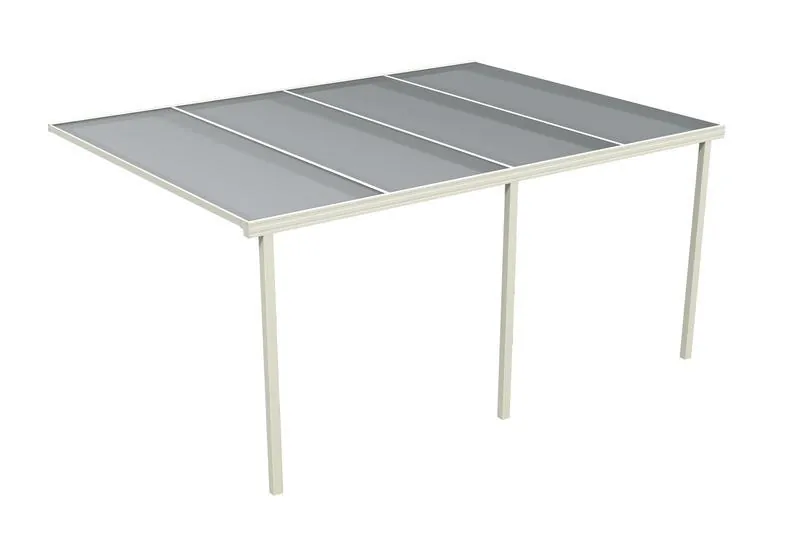
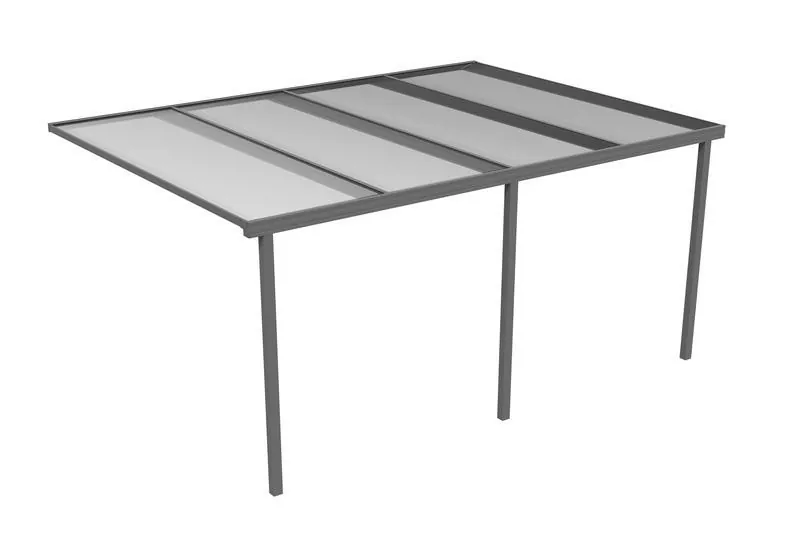
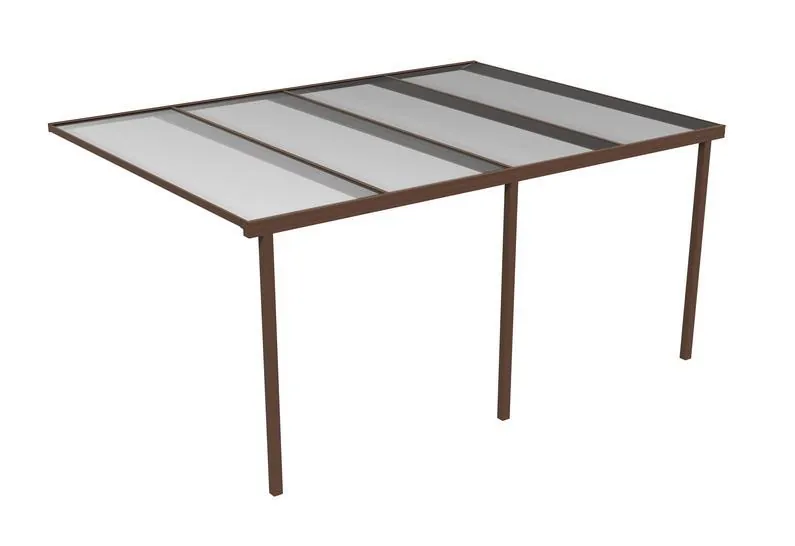



Polycarbonate roofing has become a popular choice for everything from garden rooms and conservatories to carports, porches, patios and commercial buildings. But is polycarbonate actually a good roofing material?
The short answer is yes… but the right type of polycarbonate makes all the difference.
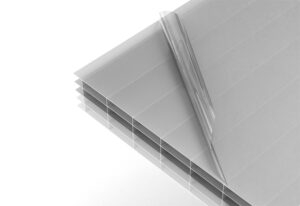
Polycarbonate is lightweight, strong, impact resistant and available in a wide range of structures, thicknesses, colours and finishes. Unlike traditional glass, it can be considerably easier to handle and install, while multiwall polycarbonate can provide excellent thermal insulation.
However, choosing a polycarbonate roof isn’t simply a case of picking the thickest or clearest sheet available. Different types of polycarbonate are designed to do different jobs, and factors such as thermal insulation, light transmission, appearance, roof design and installation all need to be considered.
So, if you’re wondering whether a polycarbonate roof is any good, let’s take a closer look at what makes polycarbonate such a popular roofing material – and which type could be right for your project.
Why is polycarbonate good for roofing?
Polycarbonate is a thermoplastic material with a particularly useful combination of strength, low weight and weather resistance. These properties have made it a popular alternative to glass and other traditional roofing materials.
One of the biggest advantages is its high impact resistance. Polycarbonate is much more resistant to impact than glass, making it a practical choice for outdoor roofing where the material may be exposed to hail, falling branches or accidental knocks during installation and maintenance.
It is also considerably lighter than glass. This can make sheets easier to transport, handle and position, while reducing the weight placed on the supporting roof structure.
But strength and weight aren’t the only reasons polycarbonate works so well for roofing.
Depending on the type of sheet you choose, polycarbonate can also provide:
- Excellent natural light transmission
- Thermal insulation
- UV protection
- Impact resistance
- Weather resistance
- A lightweight roofing solution
- A choice of clear, translucent and tinted finishes
- Easy cutting and handling
- A relatively low maintenance surface
- Options for both domestic and commercial applications
This combination makes polycarbonate particularly useful where you want a roof that provides shelter without completely blocking out natural daylight.
What types of polycarbonate can be used for roofing?
This is where things can become confusing.
“Polycarbonate” is not one single type of roofing sheet. There are several different forms, and they can perform very differently.
The main types used for roofing include twinwall and multiwall polycarbonate, solid polycarbonate and corrugated polycarbonate.
Twinwall polycarbonate
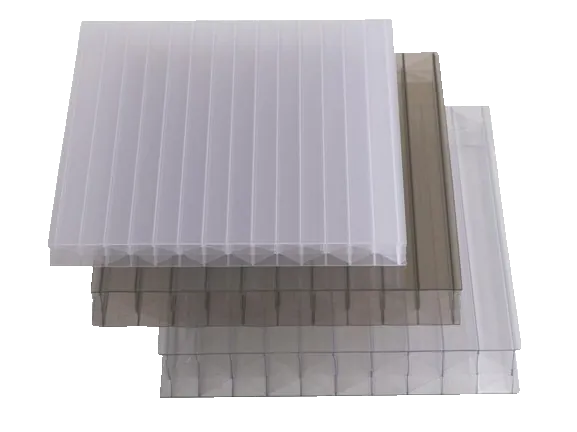
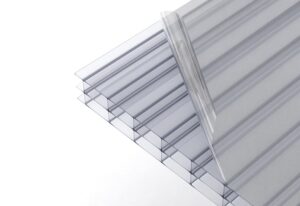
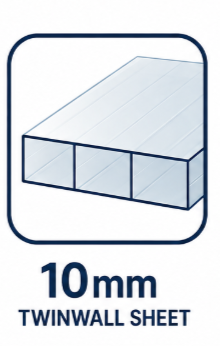
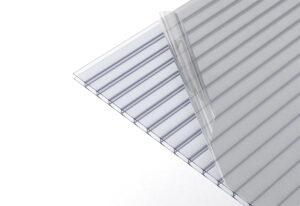
Twinwall polycarbonate consists of two layers connected by internal ribs. The resulting air space provides insulation while keeping the sheet relatively lightweight.
Twinwall is available in different thicknesses for different applications. Thinner 4mm–6mm sheets are commonly used for greenhouses, while 10mm twinwall is typically used for domestic roofing projects where greater strength and thermal insulation are required.
Twinwall is particularly popular for domestic roofing projects such as:
- Porches
- Pergolas
- Patio covers
- Canopies
- Carports
- Greenhouses
- Small extensions
- Garden buildings
It offers a good balance between price, weight, strength, light transmission and insulation.
For many domestic roofing projects, 10mm twinwall is an excellent starting point, while 4mm–6mm sheets are often suitable for greenhouse applications.
Multiwall polycarbonate
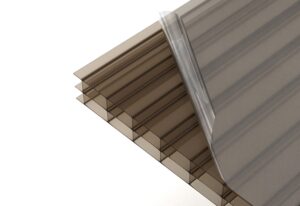
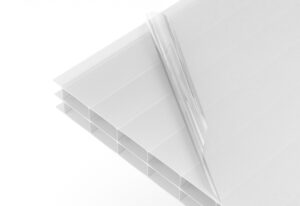
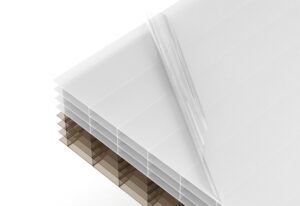
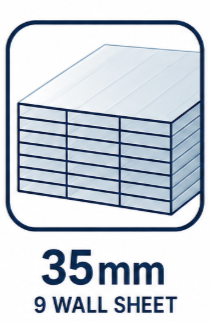
Multiwall polycarbonate takes the same basic principle further by incorporating additional internal layers and air spaces.
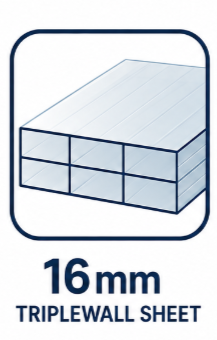
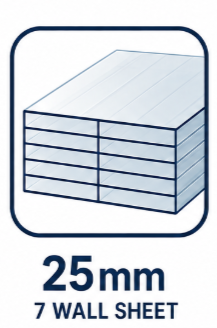
The exact internal structure can vary considerably. You may come across triple-wall, five-wall, seven-wall and other configurations, depending on the manufacturer and product range.
Generally, adding more walls and increasing the sheet thickness can improve the thermal performance of the panel. However, the structure itself matters, so thickness alone should not be used to compare two completely different products.
Multiwall polycarbonate is particularly useful where thermal insulation is an important consideration, such as conservatories, sunrooms, garden rooms, larger canopies and other areas where you want to reduce heat transfer.
The internal air spaces are an important part of how these sheets work. They help slow the transfer of heat through the roof, making multiwall polycarbonate considerably more thermally insulating than a single layer of glazing.
Solid polycarbonate
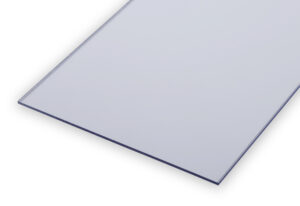
Solid polycarbonate is a completely different construction.
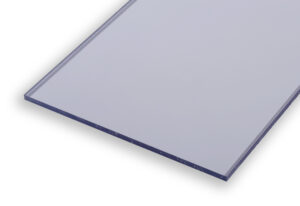
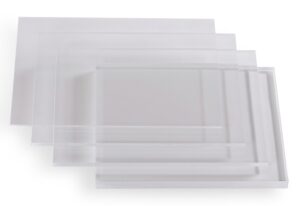
Rather than having internal walls and air pockets, it is a solid sheet of polycarbonate. Visually, it is much closer to glass and can provide a high level of clarity where transparency is important.
Solid polycarbonate is a good option where you want:
- Excellent clarity
- A glass like appearance
- High impact resistance
- A strong, flat sheet
- Good light transmission
The trade off is that solid polycarbonate does not provide the same level of thermal insulation as a multiwall sheet of comparable overall thickness.
This is why the choice between solid and multiwall often comes down to a simple question: Do you prioritise clarity and appearance, or thermal insulation?
Corrugated polycarbonate
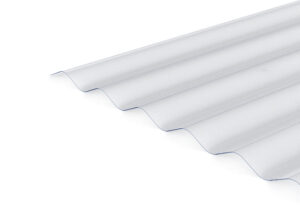
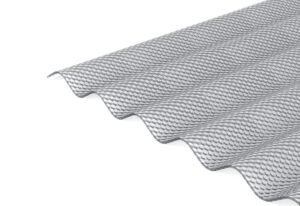
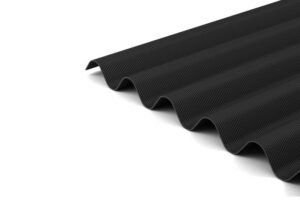
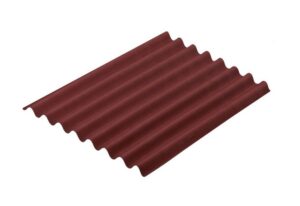
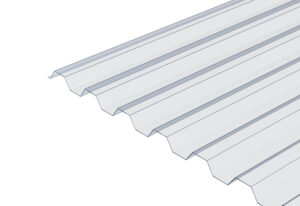
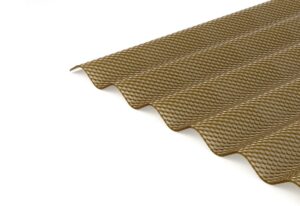
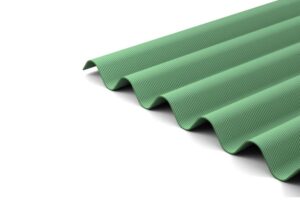
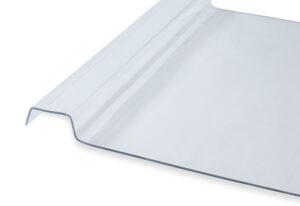
Corrugated polycarbonate sheets have a profiled shape, similar to traditional corrugated roofing sheets.
They are often used where a straightforward, lightweight roofing solution is required, including garages, agricultural buildings, outbuildings, covered walkways and other structures.
Corrugated polycarbonate can provide excellent daylight transmission while offering the strength and weather resistance associated with polycarbonate.
It is worth remembering that corrugated and multiwall sheets are not interchangeable. Their profiles, fixing methods, support requirements and installation details are different, so the manufacturer’s instructions should always be followed.
Which polycarbonate is best for a roof?
There isn’t one answer that applies to every project.
The best polycarbonate roofing sheet depends on what you want the roof to achieve.
If thermal insulation is your priority: Multiwall polycarbonate is generally the better choice because its internal air spaces help reduce heat transfer.
If maximum clarity is your priority: Solid clear polycarbonate is worth considering where you want a more glass-like appearance.
If you’re looking for a lightweight domestic roofing solution: Twinwall polycarbonate can provide a good balance of insulation, strength and affordability.
If you’re covering an outbuilding or need a profiled roofing product: Corrugated polycarbonate may be more appropriate.
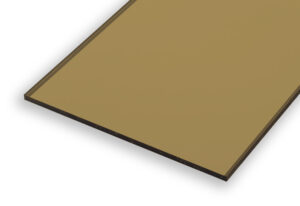
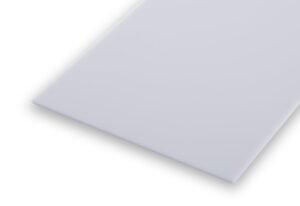
The colour and finish of the sheet should also be considered. Clear sheets allow more direct daylight through, while opal, bronze and other tinted options can alter the amount and quality of light entering the space and can help manage glare and solar heat gain.
Does polycarbonate roofing keep a room warm?
This is one of the most common questions we receive.
The answer depends heavily on the type of polycarbonate being used.
A multiwall sheet contains internal air spaces, which provide a degree of thermal insulation. Generally, the more sophisticated the multiwall structure, the greater the potential thermal performance of the sheet.
That doesn’t mean a polycarbonate roof will automatically make a building warm in winter or cool in summer. The roof is only one part of the building envelope. Wall insulation, ventilation, orientation, glazing, shading and heating will all influence the temperature inside.
It is also important to understand that light transmission and thermal performance are not exactly the same thing.
A very clear sheet may allow a lot of natural light into a building, but a more heavily structured or tinted sheet may provide different thermal and solar control characteristics.
This is why choosing a sheet based solely on how much light it lets through isn’t always the best approach.
Does polycarbonate roofing let too much heat in?
It can, depending on the specification.
Clear polycarbonate allows a significant amount of daylight through, and direct sunlight can also contribute to solar heat gain.
For a south-facing roof, conservatory or other area exposed to strong sunlight, the choice of colour, tint and sheet structure can therefore be particularly important.
This is one reason manufacturers offer products with different light transmission and solar control characteristics.
If you’re concerned about overheating, don’t automatically choose the clearest sheet. A translucent or solar control option may be more suitable depending on the application.
Does polycarbonate roofing block UV rays?
Quality polycarbonate roofing products are commonly manufactured with UV protection.
This is important because prolonged exposure to ultraviolet radiation can cause plastics to degrade, leading to changes such as yellowing, loss of optical performance and embrittlement.
UV protection helps protect the sheet from these effects.
However, it is essential that the sheet is installed the correct way around. Many multiwall polycarbonate panels have a designated UV protected side, identified by the protective film or manufacturer markings.
The UV protected side should face outwards, pointing to the sun.
This is one of those small installation details that can make a significant difference to the long term performance of the roof.
Is polycarbonate stronger than glass?
Polycarbonate is exceptionally impact resistant and is widely used where resistance to impact is important.
Compared with ordinary glass, polycarbonate is much less likely to shatter when struck. This makes it particularly attractive for roofing, where the material is exposed to outdoor conditions.
It is also much lighter than glass, which can make handling and installation easier.
That doesn’t mean polycarbonate is indestructible. Sheets can still be scratched, damaged by unsuitable chemicals, or affected by incorrect installation.
The key is that polycarbonate offers an impressive combination of low weight and high impact resistance, which is one of the reasons it is so widely used in construction and glazing applications.
Is a polycarbonate roof noisy when it rains?
This is another common concern, particularly when people are considering polycarbonate for a conservatory, porch or garden room.
Yes, rain can be audible on polycarbonate roofing – just as it can be on many lightweight roofing materials.
The amount of noise experienced inside will depend on the roof construction, sheet type, thickness, supporting structure and the building itself.
Multiwall polycarbonate can provide better acoustic performance than a very lightweight single-layer roofing material because of its multi-layer construction, although it should not be viewed as a soundproofing material.
If acoustic performance is a major priority, the roofing specification should be considered alongside the rest of the building structure.
Does polycarbonate roofing leak?
Polycarbonate itself does not inherently cause a roof to leak.
Leaks are much more commonly associated with incorrect design, unsuitable fixings, inadequate support or poor installation.
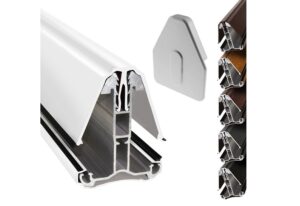
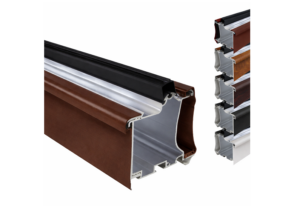
The sheet needs to be installed as part of a suitable roofing system, with appropriate glazing bars, profiles, fixings, end closures and sealing details.
Multiwall sheets also have internal flutes, and these need to be correctly oriented so that moisture and condensation can drain appropriately.
The roof pitch, sheet orientation, support spacing, thermal movement and drainage details all matter.
This is why following the manufacturer’s installation recommendations is so important.
Why does condensation sometimes appear inside polycarbonate sheets?
Condensation within the internal flutes of multiwall or twinwall polycarbonate can occur naturally.
It does not automatically mean that the sheet is defective.
Polycarbonate contains internal air spaces, and when warm, moisture laden air comes into contact with cooler surfaces, condensation can form. Temperature differences between day and night, humidity levels and the construction of the roof can all contribute.
Correct installation helps manage the situation.
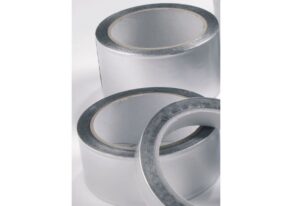
The internal flutes should run in the correct direction so that any moisture can drain towards the bottom of the roof, and the appropriate tape, closures and profiles should be used according to the manufacturer’s recommendations.
If you’re interested in this subject, it’s worth reading our dedicated article on condensation in polycarbonate roof sheets, as there is considerably more to understand than simply assuming that condensation means a panel has failed.
How long does a polycarbonate roof last?
There isn’t a single lifespan that applies to every polycarbonate roof.
The expected service life depends on the quality and specification of the sheet, its UV protection, the environment it is installed in, how it is maintained and, perhaps most importantly, whether it has been installed correctly.
Good quality polycarbonate roofing products are designed for long term outdoor use, and manufacturers offer warranties on many of their products.
For example, UV protection is specifically designed to help maintain the material’s performance when exposed to sunlight over time.
It is therefore better to look at the specific manufacturer’s warranty and technical data for the product you’re buying rather than relying on a generic claim that every polycarbonate roof will last a certain number of years.
Does polycarbonate need much maintenance?
One of the advantages of polycarbonate roofing is that it is relatively low maintenance.
A simple cleaning routine can help keep the roof looking its best and allow you to spot any problems early.
However, care should be taken when cleaning polycarbonate. Abrasive materials, aggressive chemicals or unsuitable cleaning products can damage the surface.
Multiwall sheets also require particular care around the internal flutes. Keeping the correct sealing and closure system in place helps prevent unwanted debris and moisture from entering the channels.
Regularly checking the roof for loose fixings, damaged profiles, blocked drainage points or signs of damage is also sensible.
Is polycarbonate cheaper than glass?
Polycarbonate can be a cost effective alternative to glass, but it isn’t always useful to compare the materials on sheet price alone.
The overall cost of a roof includes the glazing material, supporting structure, profiles, fixings, transportation, cutting and installation.
Because polycarbonate is lightweight and easier to handle than glass, it can offer advantages during transportation and installation. Its impact resistance can also reduce the risk of breakage during handling.
The most economical option is therefore the one that provides the right performance for your particular project – rather than simply choosing the cheapest sheet available.
Can polycarbonate be used for a conservatory roof?
Yes.
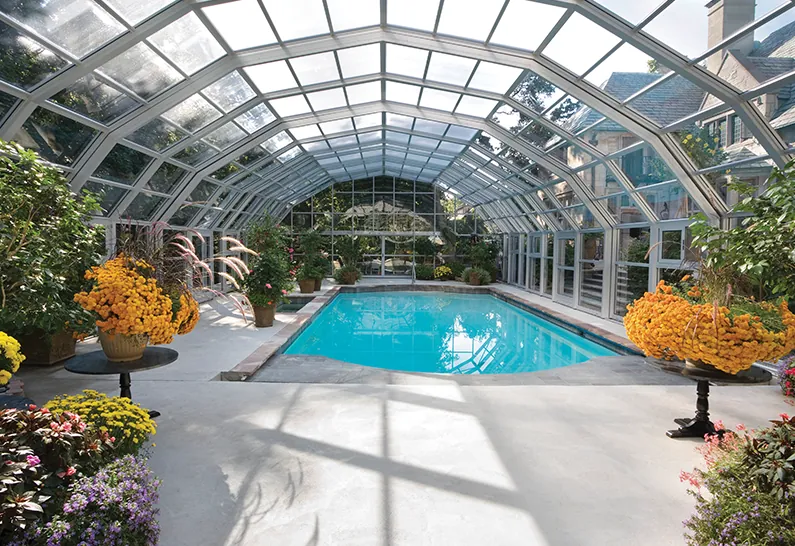
Polycarbonate has been widely used for conservatory and sunroom roofing because it provides natural daylight while offering significantly better thermal insulation when using a suitable multiwall construction.
The important thing is to choose a specification appropriate for the structure.
A small canopy and a fully enclosed conservatory have very different requirements. The roof should be considered as part of the overall building design, rather than choosing a sheet based solely on thickness.
What thickness of polycarbonate should I use for roofing?
This is another question where there is no universal answer.
The correct thickness depends on the sheet structure, the support spacing, the dimensions of the roof, the environmental conditions and the manufacturer’s load recommendations.
A thicker sheet is not automatically the best sheet.
For example, a multiwall panel can have a completely different internal structure and thermal performance from a solid sheet of a similar thickness.
For this reason, it is important to select the sheet structure and thickness together, rather than simply asking for the thickest available option.
Does polycarbonate expand and contract?
Yes – and this is a very important consideration during installation.
Like many materials, polycarbonate expands when it gets warmer and contracts as temperatures fall. Because roofing sheets are exposed to significant temperature changes, the installation needs to accommodate this movement.
Fixing methods, hole sizes, sheet dimensions, glazing systems and profiles should therefore follow the manufacturer’s recommendations.
A sheet that is installed too tightly or fixed incorrectly may not have enough room to move, potentially affecting the long term performance of the roof.
This is one of the reasons professional installation guidance should always be followed rather than treating polycarbonate as simply a sheet of plastic that can be screwed down.
So, are polycarbonate roofs any good?
In our opinion, absolutely – provided you choose the right product for the job.
Polycarbonate offers a particularly useful combination of strength, low weight, natural light transmission, impact resistance and, in multiwall products, thermal insulation.
But the biggest mistake is treating all polycarbonate sheets as though they are the same.
A 10mm twinwall sheet, a 16mm multiwall sheet, a solid polycarbonate panel and a corrugated roofing sheet can all be made from polycarbonate, but they are designed with different applications and performance requirements in mind.
The best roof is therefore not necessarily the thickest, clearest or cheapest one. It is the one that matches the requirements of the building.
Think about how much natural light you want, whether thermal insulation is important, whether you need a clear or translucent appearance, how exposed the roof will be to the weather and what type of supporting structure you have.
And don’t overlook installation. Even an excellent roofing sheet can perform poorly if it is incorrectly supported, fixed or sealed.
Choosing polycarbonate roofing for your project
At The Polycarbonate Store, we supply a range of polycarbonate roofing sheets and accessories for domestic, commercial and outdoor projects.
Our range includes twinwall, multiwall, solid and corrugated polycarbonate, with different thicknesses, colours and finishes available depending on the application.
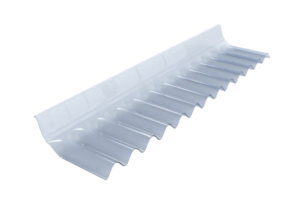
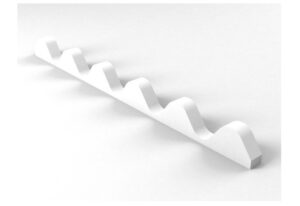
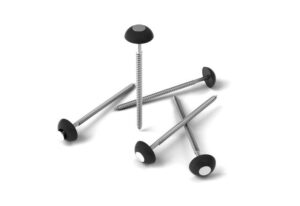
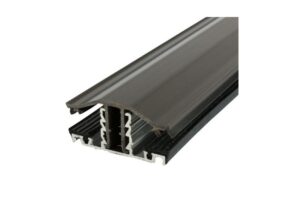
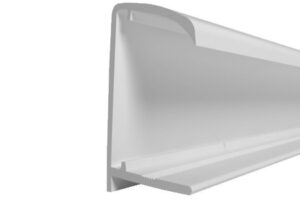
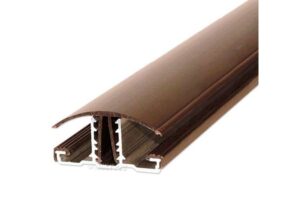
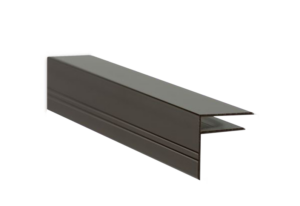
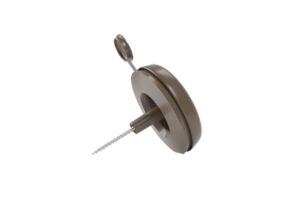
We also supply the accessories needed to create a complete roofing system, including glazing bars, F-sections, sheet closures, fixing buttons and other installation components.
If you’re unsure which type of polycarbonate roofing is suitable for your project, it’s always worth considering the application first rather than simply choosing a sheet based on price or thickness.
The right polycarbonate sheet can provide a durable, lightweight and attractive roofing solution while allowing you to make the most of natural daylight.
Browse our range of polycarbonate roofing sheets or contact our team if you need help deciding which type is suitable for your project.




Leave a Reply