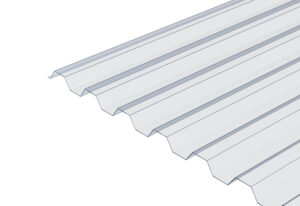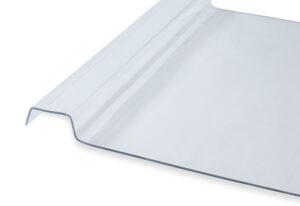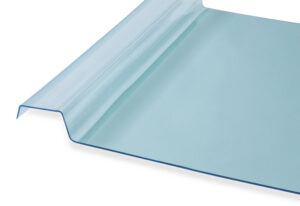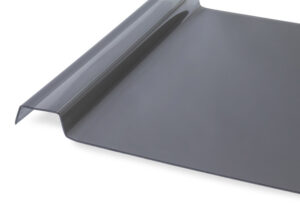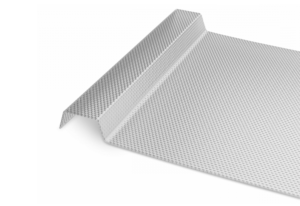








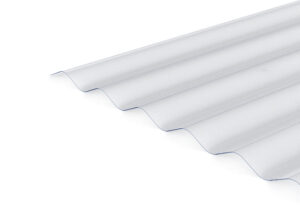
PVC Corrugated Roofing Sheets
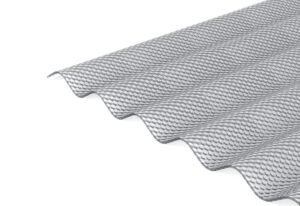
Polycarbonate Corrugated Roofing Sheets
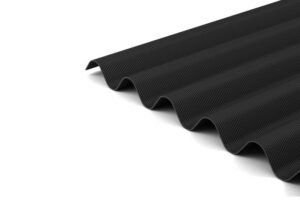
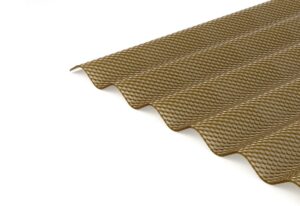
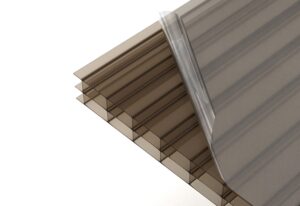
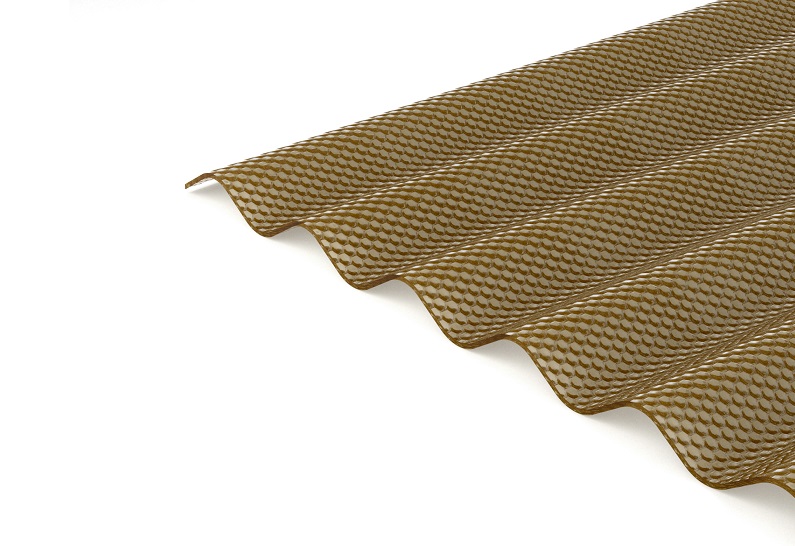
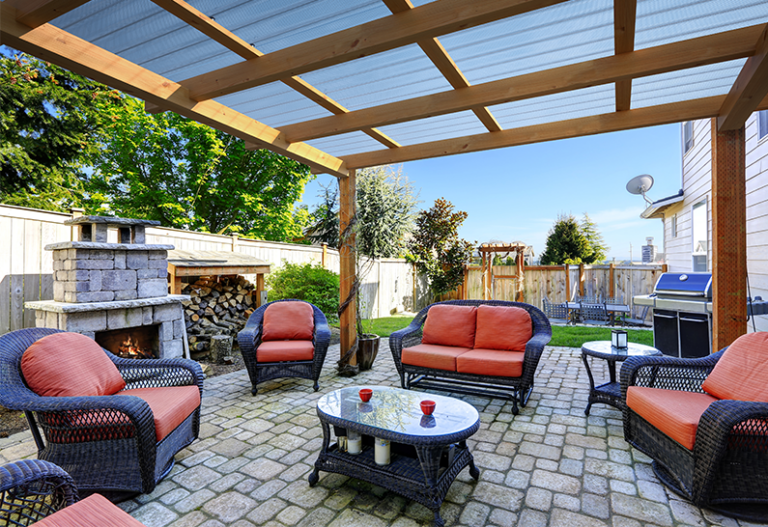
Our bronze corrugated roofing sheets provide a stylish tinted finish while delivering excellent durability and weather resistance. Ideal for pergolas, canopies, carports, covered walkways, and garden structures, these lightweight sheets offer good light transmission while helping to reduce glare and solar heat build-up.
Manufactured from high-quality polycarbonate or PVC, bronze corrugated sheets are easy to install, impact-resistant, and designed for long-term outdoor performance. Available in a range of lengths and profiles, they provide an attractive and practical roofing solution for both domestic and commercial projects.
Yes on both counts. Suntuf Beehive bronze passes 33% of daylight against 87% for the clear version, so far less sunlight, and the heat that comes with it, reaches the space below. The Beehive surface also diffuses all the light that does get through, which cuts glare and hard shadows. Expect a shaded, softly lit area rather than a dim one.
Polycarbonate. The bronze corrugated sheet we stock is Suntuf Beehive, a polycarbonate sheet, not PVC. That matters because polycarbonate is the stronger of the two, resists hail and impact, and copes with a far wider temperature range. Our Palruf PVC corrugated is sold in clear, plus a Trans-Blue box profile. If you need a bronze tint, polycarbonate is the option.
Suntuf Beehive bronze lets through 33% of daylight, so roughly a third. The clear Beehive sheet passes 87% by comparison. Because the Beehive surface diffuses 100% of that light, the effect is even shade without bright patches or glare. That suits a pergola or seating area, but it is too dark for a greenhouse or anywhere plants need full light.
Yes. Suntuf Beehive bronze is a hail and impact resistant polycarbonate, so it handles the exposure a carport gets as well as a pergola. Sheets come 1045mm wide and 2000 to 6000mm long. Keep the pitch at 10 degrees if you can, set purlins at 1000 to 1200mm centres as our product page recommends, and fit the UV-protected side facing the sky.
No. Bronze and clear Suntuf Beehive are the same polycarbonate with the same co-extruded UV layer, so weather resistance, impact strength and service temperature are identical. The tint only changes light and heat transmission. The one rule that applies to every tint is orientation: fit the UV-protected side, marked by tape or print, facing outwards, or the sheet will discolour early.