














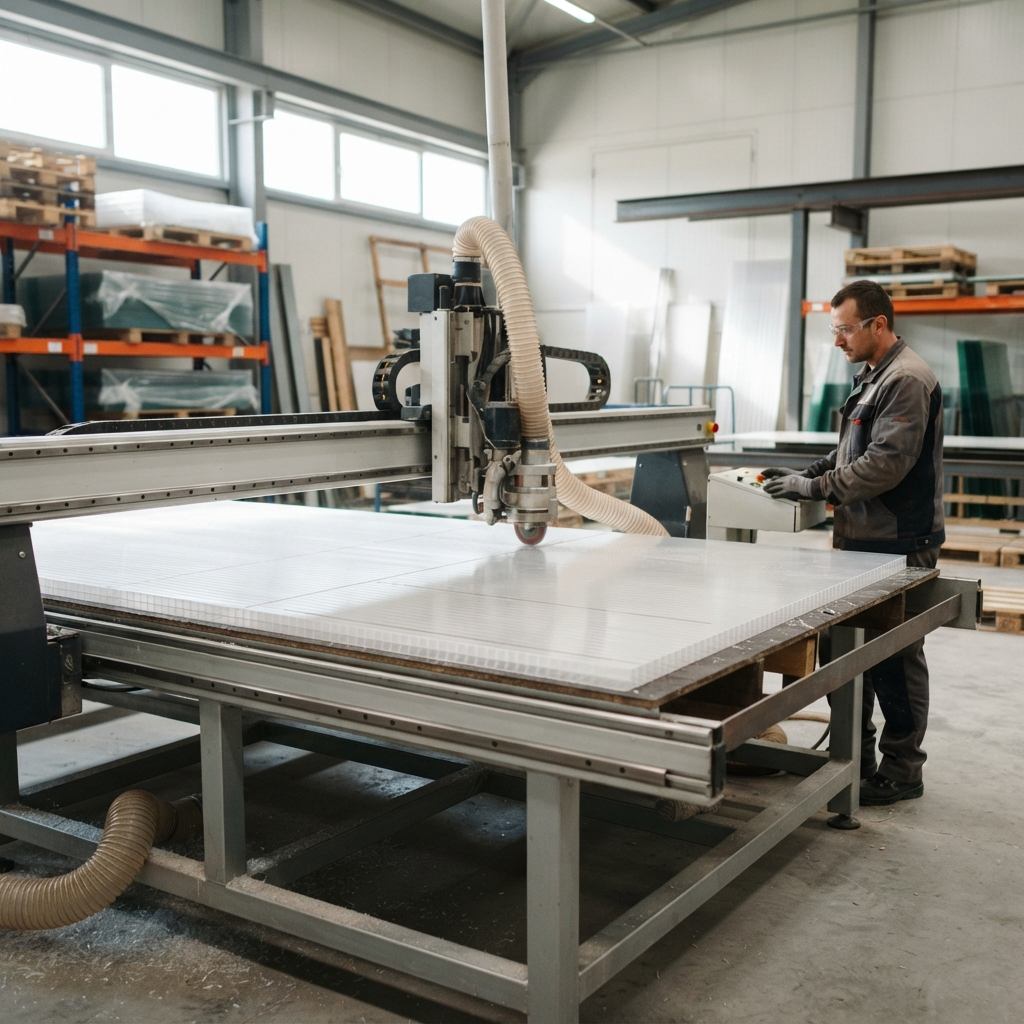
When ordering cut to size polycarbonate sheets, it is natural to expect the sheets to arrive at exactly the dimensions you have requested.
However, polycarbonate sheets are manufactured and cut using industrial processes, and there is an accepted cutting tolerance of +/- 5mm. This means that while we always endeavour to cut your sheets as accurately as possible, the finished dimensions may be up to 5mm larger or 5mm smaller than the requested measurement.
For example, if you order a polycarbonate sheet at 600mm wide, the finished sheet could measure between 595mm and 605mm.
This is an important consideration when planning a polycarbonate roof, greenhouse, canopy, conservatory, carport or other glazing project.
In this guide, we explain exactly what +/- 5mm means, why cutting tolerance exists, how it can affect your installation and what you should do when measuring and ordering bespoke polycarbonate sheets.
What is a polycarbonate cutting tolerance?
A cutting tolerance is the acceptable amount by which the finished dimensions of a sheet can differ from the dimensions requested.
At The Polycarbonate Store, we will always endeavour to cut sheets to the measurements provided. However, an industry standard cutting tolerance of +/- 5mm applies when cutting polycarbonate sheets.
This means the requested measurement is the target dimension rather than a guarantee that every individual sheet will be exactly that measurement.
What does ± 5mm actually mean?
The symbol ± means “plus or minus”. Therefore, a ± 5mm tolerance means:
- A requested dimension of 500mm could be between 495mm and 505mm.
- A requested dimension of 750mm could be between 745mm and 755mm.
- A requested dimension of 1000mm could be between 995mm and 1005mm.
- A requested dimension of 2000mm could be between 1995mm and 2005mm.
The tolerance applies to the cutting process, rather than meaning that we deliberately cut every sheet 5mm over or under the requested size.
A sheet could be very close to the requested measurement, but it is important that your installation allows for the permitted tolerance.
Why can’t polycarbonate sheets be cut to exactly the same measurement every time?
Customers sometimes ask why a sheet cannot simply be cut to an exact measurement such as 612mm or 2847mm.
The answer is that polycarbonate is a manufactured sheet material, and cutting involves industrial machinery and physical material tolerances.
There are several factors involved in producing and cutting large plastic sheets, including:
- The manufacturing process used to produce the sheet
- The original dimensions of the stock sheet
- Material movement during processing
- Cutting equipment and blade characteristics
- Temperature and environmental conditions
- The length and width of the sheet
- The cutting process itself
- Normal manufacturing and measurement variation
A cutting machine is set up to produce the requested dimension as accurately as reasonably possible, but it cannot be treated in the same way as a precision engineering process where extremely tight tolerances are specified.
For this reason, ± 5mm should be allowed for when designing and installing a cut to size polycarbonate project.
Does ± 5mm apply to both the length and width?
Yes. For example, if you order a bespoke sheet with dimensions of 600mm × 3000mm, the ± 5mm tolerance can apply to both dimensions. In practical terms, the finished sheet could potentially be within approximately: 595mm–605mm wide and 2995mm–3005mm long.
This is why it is particularly important to consider tolerance when polycarbonate sheets are being installed into a fixed opening or between glazing bars.
Why is cutting tolerance particularly important for polycarbonate roofing?
Cutting tolerance becomes particularly important when sheets need to fit into a glazing system.
Polycarbonate roofing is commonly installed between glazing bars, with the sheet width calculated from the position of the supporting rafters and the internal dimensions of the glazing bars. The sheet therefore needs to fit correctly while also allowing for the movement and installation requirements of the system.
For example, a customer may measure the distance between two rafters as 600mm and assume that the polycarbonate sheet should also be exactly 600mm wide. However, this does not necessarily mean that a 600mm wide sheet is the correct size. The glazing bar profile, required deductions, sheet movement and installation tolerances all need to be considered.
Our sheet recommendations and calculation guide provides an example of how sheet widths can be calculated from the overall roof dimensions, number of sheets and glazing bar deductions.
What happens if my polycarbonate sheet is 5mm too large?
If a sheet arrives at the upper end of the permitted tolerance and is too large for the opening, it may require trimming on site.
This is one reason we strongly recommend that customers check their measurements and installation requirements before ordering. A small amount of adjustment on site is often considerably easier than discovering that the sheets are too short.
Polycarbonate is a workable material and can generally be cut using suitable tools and the correct technique. However, the method of cutting will depend on the type and thickness of polycarbonate being used.
If the dimensions of your project are critical, you should plan for the possibility that some on-site adjustment may be required.
What happens if my polycarbonate sheet is 5mm too small?
A sheet that is slightly smaller than requested can be more problematic than one that is slightly oversized.
An oversized sheet can be trimmed. An undersized sheet cannot be made larger.
For this reason, we recommend allowing sufficient margin in your measurements and ordering process, particularly where you are working with multiple sheets or a fixed structure.
If an installation has been designed around an exact measurement with no allowance whatsoever, even a small dimensional variation can cause problems.
Does the ± 5mm tolerance apply to every type of polycarbonate?
The cutting tolerance applies to bespoke cut to size sheets supplied by us. This can include different types of polycarbonate, including:
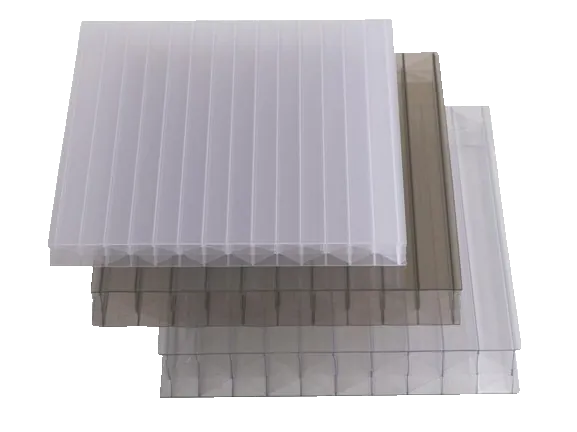
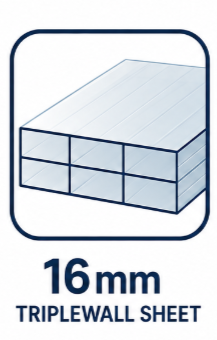
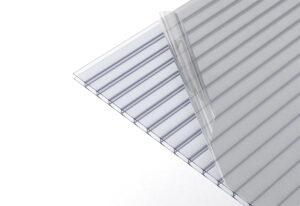
- Twinwall polycarbonate
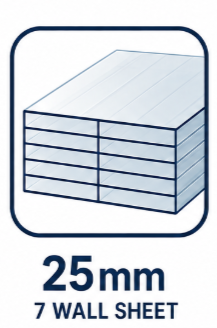
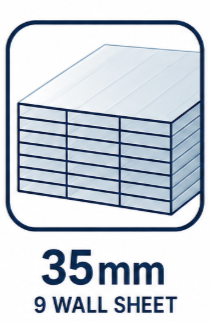
- Multiwall polycarbonate
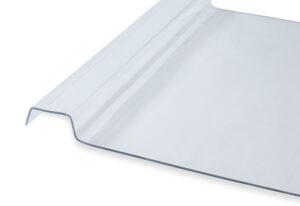
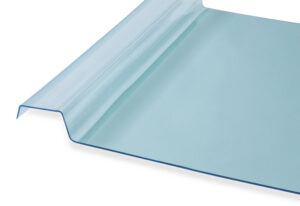
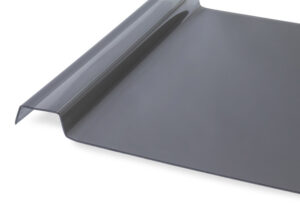
- Solid polycarbonate
- Other bespoke sheet materials where a cutting service is offered
The exact product information should always be checked before ordering. Our product pages also state the ± 5mm cutting tolerance on applicable cut to size products.
Can I return a bespoke polycarbonate sheet if the dimensions are different?
Bespoke cut to size sheets are made specifically to the dimensions requested and are therefore generally non-returnable. This is another reason why it is important to understand the cutting tolerance before placing an order.
If you require a bespoke sheet, make sure you are confident that the measurements provided are correct and that your installation allows for the applicable cutting tolerance.
What measurements should I provide when ordering polycarbonate?
If you are unsure what size sheets you require, don’t simply provide the size of the opening and assume that is the sheet size. For roofing projects, useful information includes:
- Overall roof width
- Roof projection
- Number of rafters
- Rafter centre-to-centre measurements
- Rafter width
- Roof pitch
- Type and thickness of polycarbonate
- Desired colour
- Type of glazing bars
- Whether the sheets are being installed between glazing bars
- Photographs of the existing structure
- A drawing or sketch, where available
This information allows the sheet requirements to be considered as part of the complete roofing system, rather than treating the polycarbonate sheet as an isolated component.
Can polycarbonate sheets be trimmed on site?
Yes, polycarbonate sheets can be cut or trimmed on site using suitable equipment and appropriate cutting methods. The correct cutting method depends on the material.
For example, solid polycarbonate and multiwall polycarbonate have different structures and therefore require different considerations when cutting.
When trimming a multiwall sheet, care should also be taken not to damage the internal cells or compromise the sheet’s installation. Always follow the relevant manufacturer’s installation guidance for the particular polycarbonate product.
Does temperature affect the size of polycarbonate?
Yes. Polycarbonate is a thermoplastic material and like many plastics, it expands and contracts with changes in temperature. This is an important consideration when installing polycarbonate roofing.
The installation system needs to allow for thermal movement rather than holding the sheet rigidly at an exact dimension. This is separate from the ± 5mm cutting tolerance. In other words, there are two different things to consider:
Cutting tolerance: The variation that can occur when the sheet is cut to size.
Thermal movement: The natural expansion and contraction of the material as temperatures change.
Both need to be considered when designing and installing a polycarbonate roof.
Does cutting tolerance affect the warranty?
The cutting tolerance itself is not a product defect when the finished dimension falls within the applicable tolerance. However, correct installation is essential for the long term performance of polycarbonate.
The sheets should always be installed in accordance with the relevant manufacturer’s installation recommendations and the requirements of the glazing system being used.
Incorrect installation, inadequate support, insufficient allowance for movement or forcing sheets into an opening can cause problems that are unrelated to the manufacturing quality of the material.
How can I avoid problems caused by cutting tolerance?
There are several simple steps you can take before ordering:
1. Measure carefully: Take measurements at several points rather than relying on a single measurement.
2. Check the structure: Make sure the rafters, glazing bars and supporting framework are correctly positioned.
3. Don’t assume the gap equals the sheet size: Glazing bar profiles and installation deductions need to be considered.
4. Allow for ± 5mm: Remember that bespoke cut to size sheets are subject to the applicable cutting tolerance.
5. Don’t design around zero tolerance: A polycarbonate roof should not rely on every sheet being exactly the nominal dimension.
6. Consider on site trimming: Where appropriate, allow for minor adjustments during installation.
7. Provide photographs: Photographs of the structure can be extremely useful when asking for technical advice or requesting a quotation.
8. Ask before ordering if you’re unsure: If you aren’t certain how the measurements should be calculated, provide the project details before ordering rather than guessing the sheet dimensions. Email us: [email protected]
Need help calculating your polycarbonate sheet sizes?
Getting the sheet dimensions right is one of the most important parts of planning a polycarbonate roofing project. If you’re unsure what size sheets you need, don’t guess.
For more complex projects, we recommend providing your overall measurements, rafter dimensions, roof pitch, photographs and details of the glazing system so that the requirements can be assessed correctly.
Contact us: [email protected]
Remember: polycarbonate is a roofing system, not simply a sheet of plastic. Correct measurements, suitable support, appropriate glazing bars, thermal movement and installation technique all contribute to a successful installation.




Leave a Reply