















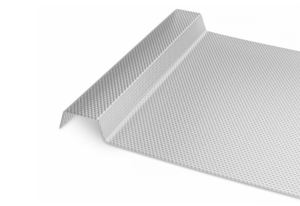




The junction between a roof and a wall needs careful weatherproofing. Rain running down the brickwork must be directed onto the roof, rather than finding its way behind the sheets or wall plate.
At The Polycarbonate Store, we recommend properly detailed, professionally installed lead flashing as best practice for a lasting roof-to-masonry-wall connection, where suitable for the roofing system. Flashing tape can have a useful role, but choosing a compatible product and preparing the surfaces correctly are essential.
Why lead flashing is our preferred approach
Lead flashing forms a durable weathering layer over the roof-to-wall junction. In a traditional masonry detail, its upper edge is secured into the wall and sealed, while the lower section overlaps the appropriate roof covering or flashing component.
This provides a more substantial weathering arrangement than relying solely on adhesive tape stuck to the surface of brickwork.
The detail must still suit the roof. Polycarbonate expands and contracts, so flashing should allow the specified movement without pinning the sheets or loading unsupported areas. Ask a competent roofer to select the lead specification, fixing arrangement and overlaps for your installation.
Where flashing tape can be useful
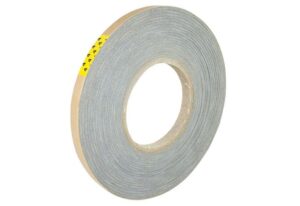
Self-adhesive flashing tape can be useful for suitable repairs or as part of a specified roof-junction detail. However, a lead-coloured surface does not make tape equivalent to traditional lead flashing.
Its performance depends on the adhesive, the condition of the surfaces, exposure and movement at the joint. Tape applied over dusty brickwork, loose paint or damp material may lift and allow water behind it.
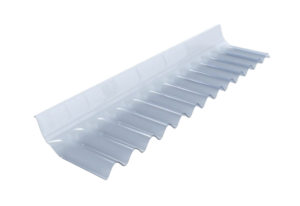
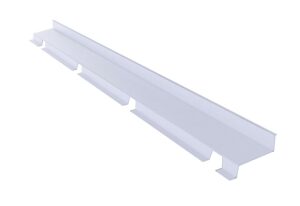
A proprietary wall plate or head wall flashing may also form part of the roof system. Follow its fitting instructions rather than assuming that tape alone completes the junction.
Choose compatibility before convenience
Only apply tape directly to polycarbonate when its manufacturer and the roofing guidance confirm that the exact product is suitable. Check any accompanying primer or sealant too.
“Butyl-based”, “bitumen-based” and “suitable for plastics” are not sufficient descriptions on their own. Formulations differ, and a product suitable for one plastic may be unsuitable for another. For example, some general-purpose flashing-tape instructions specifically exclude polycarbonate and acrylic glazing.
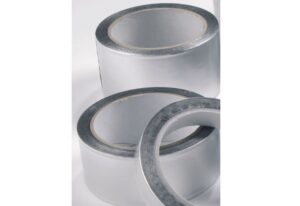
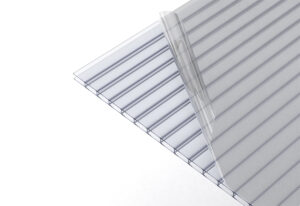
For multiwall roofing, flashing tape must not be confused with the aluminium sealing tape and breather tape used at the open flute ends. Those products perform different jobs.
Give the tape a suitable surface
Where compatible flashing tape is specified, apply it to sound, clean, dry surfaces within its stated application-temperature range.
Porous masonry may need the manufacturer’s recommended primer. Allow it to dry as instructed, and prevent incompatible primers from contacting the sheets.
Choose enough tape width to provide the required coverage on both surfaces. Form it carefully around changes in level, pressing it into full contact without trapped air, unnecessary stretching or unsupported pockets. Follow the product’s overlap and upper-edge finishing instructions.
Do not use a flame or uncontrolled heat near plastic roofing. If conditions are unsuitable for bonding, postpone the work.
Find the cause before covering a leak
If an existing roof leaks beside a wall, inspect the flashing, wall condition and drainage before adding another layer of tape. Water can enter above the visible drip and travel before appearing underneath.
Repeated patching may conceal a failed junction without correcting it. Our roofing installation advice explains the surrounding details worth checking.
For help identifying the components in your roof, contact The Polycarbonate Store with photographs before buying repair materials.
Polycarbonate roof flashing FAQs
Is lead flashing better than flashing tape?
For a lasting connection to a suitable masonry wall, our preferred approach is professionally fitted lead flashing. Tape can be appropriate for particular repairs or specified details, but it should not automatically replace a properly designed flashing arrangement.
Can I use any butyl flashing tape on polycarbonate?
No. Check the exact product’s suitability for polycarbonate, including its backing, adhesive and any required primer. The word “butyl” alone does not confirm compatibility.
Should I avoid general-purpose bitumen flashing tape?
Do not apply it directly to polycarbonate unless the exact product is explicitly approved for that use. Some manufacturers exclude polycarbonate glazing. Follow those restrictions even if the packaging describes the tape as suitable for roofs or plastics.
Does flashing tape stick straight onto brickwork?
Some products can bond to suitable masonry, but porous, rough or dusty surfaces may require preparation and a specified primer. Tape cannot form a reliable bond to loose mortar, crumbling brick or peeling paint.
Can silicone replace flashing?
A bead of silicone alone should not be treated as the complete weathering detail at a roof-to-wall junction. Compatible sealant may be part of the specified arrangement, alongside properly fitted flashing.
Can flashing tape stop condensation?
No. Flashing addresses rainwater entering a junction. Condensation forms when moist air meets a cold surface and needs a different assessment. Read our condensation guide if droplets appear across the underside of the roof.




Leave a Reply