












Good storage starts as soon as your delivery arrives. Whether installation is planned for tomorrow or several weeks away, keeping your sheets and accessories properly supported, dry and out of direct sunlight helps prevent avoidable damage.
Products designed for outdoor use still need protection before installation. A stack of roofing sheets wrapped in packaging behaves differently from individual sheets fitted correctly to a roof. Heat and moisture can become trapped, while uneven support can leave materials bowed or distorted.
At The Polycarbonate Store, we recommend storing sheets and accessories indoors, horizontally, on a clean, flat and sturdy surface, in a cool, dry, shaded and well-ventilated location.
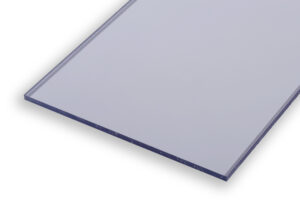
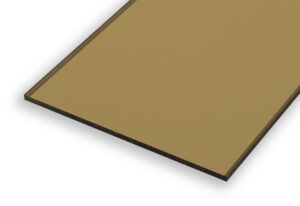
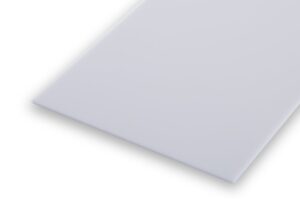
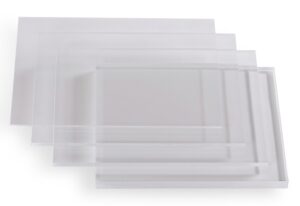
This guide covers PVC, solid and multiwall polycarbonate, acrylic sheets and roofing accessories, including what to do during summer, winter and wet weather.
1) What to do when your delivery arrives
Prepare a suitable storage space before unloading. It should be large enough to support the products without leaving ends or edges hanging unsupported.
Once the delivery is safely unloaded:
- Check your order: identify the sheets, accessories and smaller components before moving anything into storage.
- Inspect for visible problems: contact The Polycarbonate Store if goods appear damaged, defective, incorrect or incomplete on arrival.
- Remove the outer transit wrapping: do not leave products tightly wrapped in delivery packaging where heat or moisture can build up.
- Keep the protective surface film in place: where supplied, this helps prevent scratches during storage and handling.
- Move everything into suitable storage: avoid leaving the order on a driveway or lawn while you prepare the installation area.
Outer delivery wrapping and the film attached to a sheet’s surface serve different purposes. Removing transit packaging does not mean peeling the protective film from every sheet.
2) Where should sheets and accessories be stored?
Choose a dry indoor location
A suitable garage, workshop, warehouse or weatherproof outbuilding is generally the best option, provided it stays cool, dry and ventilated.
Check the actual conditions rather than relying on the building being covered. A leaking shed, a hot conservatory or a garage with strong sunlight through a window may be unsuitable.
Keep materials away from:
- Direct sunlight, including sunlight through glazing.
- Radiators, boilers, heaters and other heat sources.
- Leaks, damp floors and standing water.
- Paints, solvents, fuels and wet timber treatments.
- Cutting, grinding and other work that produces debris.
- Areas where vehicles, tools or other stored items could strike them.
An unheated building can be suitable for sheets if conditions remain appropriate. Adhesives, tapes and sealants may have more restrictive temperature requirements.
Provide flat, even support
Store sheets horizontally on a clean, level platform that supports their dimensions. Place larger sheets at the bottom and smaller sheets above them.
Avoid supporting a long sheet on just two widely spaced points. Unsupported sections can sag, particularly if the material becomes warm.
Check for protruding screws, nails, stones and grit before setting sheets down. Do not use the stack as a workbench or place tools, building materials or heavy objects on top.
Avoid leaning sheets against a wall
Leaning sheets against a fence or garage wall may seem convenient, but poor support can cause bowing, edge damage or slipping.
Horizontal storage is our general recommendation. Specialist vertical storage racks may be suitable for certain products, but only when designed to support them correctly.
3) Storage advice for each product type
Twinwall and multiwall polycarbonate
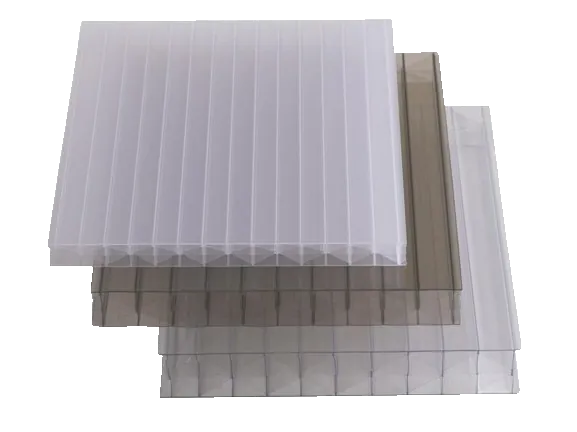
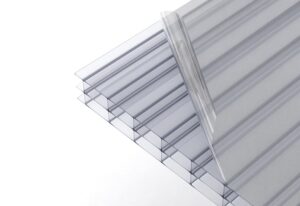
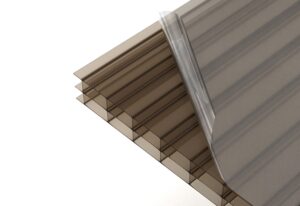
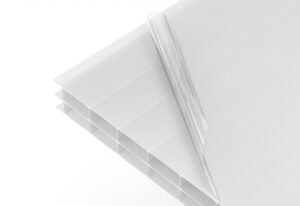
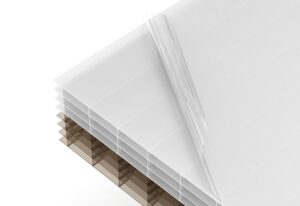
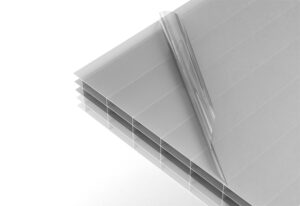
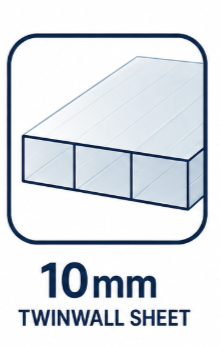
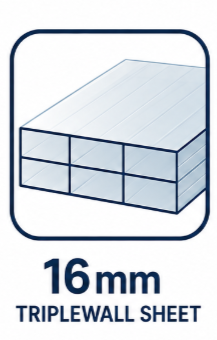
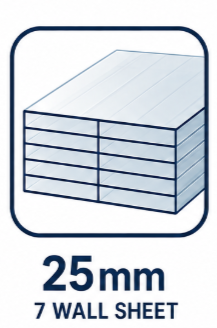
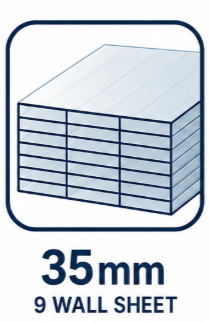
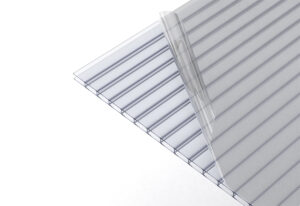
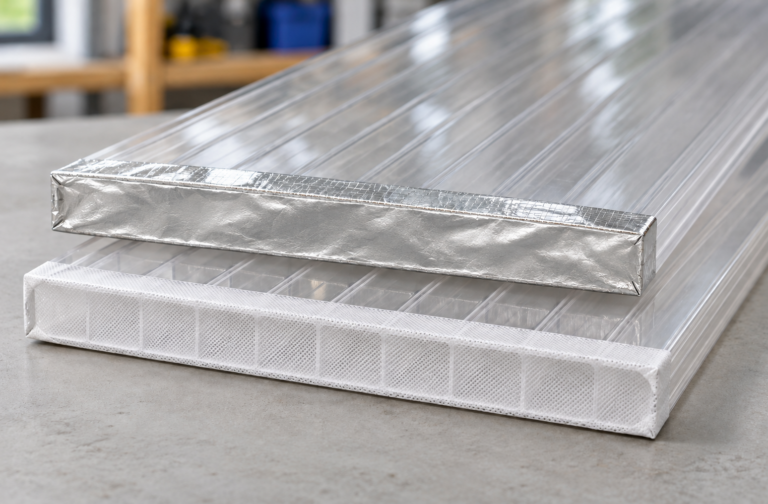
Multiwall polycarbonate sheets contain hollow channels, known as flutes. Protect these openings from rain, dirt and insects during storage. Keep the sheets flat and dry, and avoid crushing their edges or placing concentrated loads on the stack.
Where end tapes have been supplied, protect them from damage and moisture. Taped ends do not make an uninstalled stack suitable for outdoor exposure.
If you cut across the flutes before installation, protect the newly opened ends and prepare them with the appropriate tapes before fitting.
Solid polycarbonate
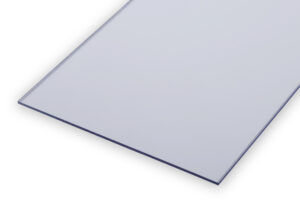
Store solid polycarbonate sheets flat, with even support and their protective surface film intact where supplied.
Lift sheets carefully rather than dragging them across one another. Dirt trapped between sheets can scratch the surfaces during movement.
Keep the stack shaded. UV protection does not prevent heat from building up between stored sheets or protect temporary film from prolonged exposure.
Corrugated polycarbonate and PVC
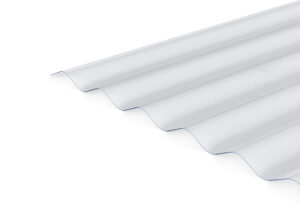
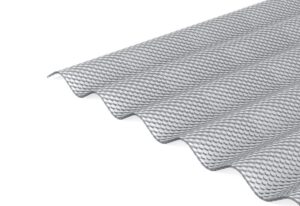
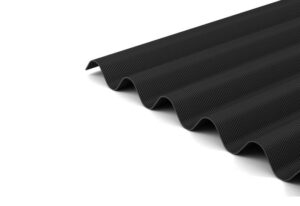
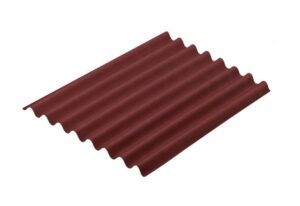
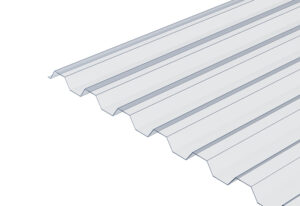
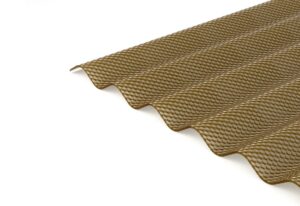
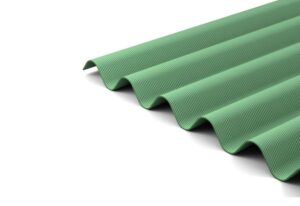
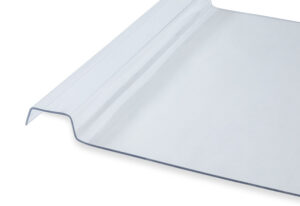
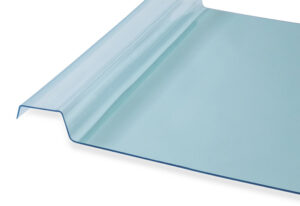
Store corrugated polycarbonate roofing sheets and corrugated PVC roofing sheets horizontally, with suitable support for the profile.
Stack matching profiles carefully so they sit together naturally. Do not force different profiles into one stack or use weight to flatten them.
Keep different materials and product types in separate stacks. In particular, avoid placing clear or translucent PVC sheets over opaque PVC products, where solar heat build-up can become a problem.
Acrylic sheets
Acrylic sheets should be stored indoors in a dry, ventilated location with a reasonably stable temperature.
Support them evenly, retain the protective surface film where supplied and protect the edges from knocks. Avoid damp packaging and uneven stacking.
If installation is being postponed for several months, check the product’s storage and film-retention guidance rather than assuming it can remain packaged indefinitely.
4) How to store roofing accessories
Accessories need the same care as the sheets. Bent glazing bars, distorted PVC trims or contaminated adhesive tapes can cause problems when fitting begins.
Glazing bars and long profiles
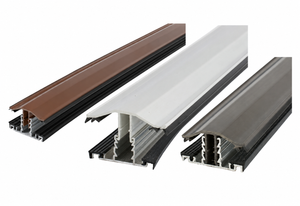
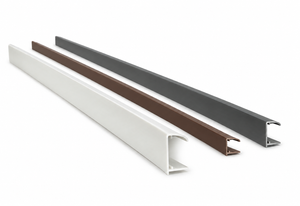
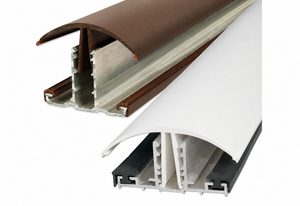
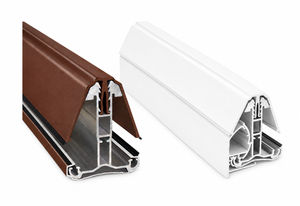
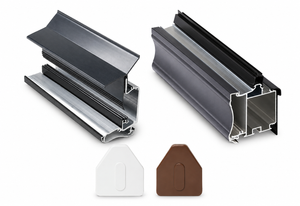
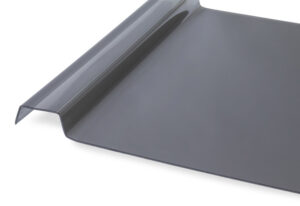
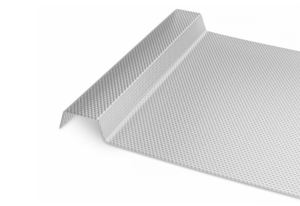
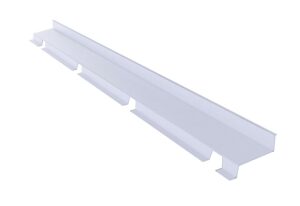
Keep glazing bars for polycarbonate, wall plates, eaves beams and other long components horizontal, with even support along their length.
Protect finishes from scratches and avoid leaving long profiles balanced on a small shelf with unsupported ends.
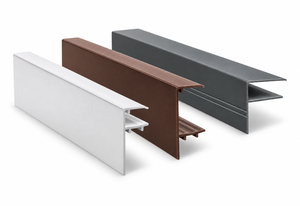
PVC closures, caps and trims
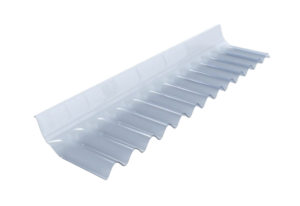
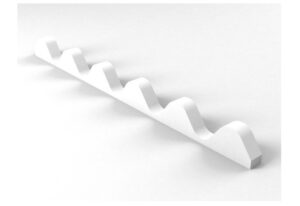
Store PVC sheet closures, top caps and finishing profiles in a cool, shaded location.
Do not leave them tightly bundled in direct sunlight or beneath heavy materials. A profile that distorts in storage may no longer fit correctly.
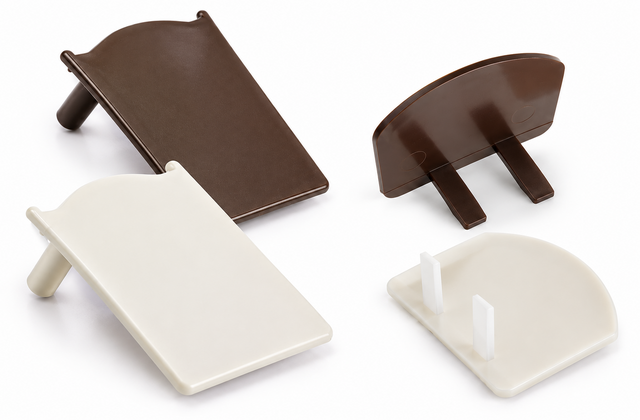
Fixings, end caps and smaller components
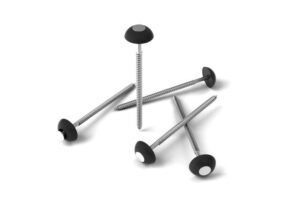
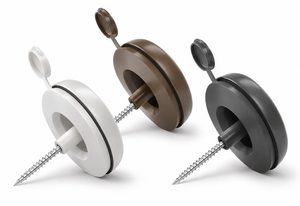
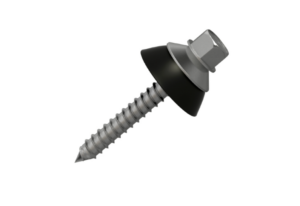
Keep small parts together in labelled, dry containers or their suitable original packaging. Separate them from sheet stacks so they cannot become trapped underneath and damage the material.
Tapes, gaskets and sealants
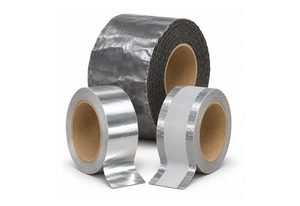
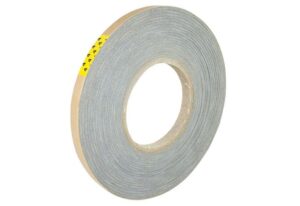
Keep roofing tapes clean and dry, with release liners intact until use. Protect gaskets from contamination, stretching and crushing.
Store sealants and adhesives according to their labels, including the specified temperature range and shelf life. A shed suitable for storing sheets may become too hot or too cold for these products.
5) Summer storage: prevent heat build-up
Direct sunlight is a particular concern during warmer weather. Heat can build up between stacked sheets and inside tightly wrapped bundles, potentially causing distortion or making protective film difficult to remove.
In summer:
- Choose a shaded location that remains shaded throughout the day.
- Avoid conservatories, greenhouses, hot vehicles and poorly ventilated containers.
- Keep products away from windows receiving strong sunlight.
- Do not use clear plastic wrapping as a sun cover.
- Avoid black or dark covers that absorb heat.
- Check the stack regularly if installation is delayed.
A sheet being UV resistant does not make it safe to leave stacked in the sun. Our guide to UV protection in polycarbonate and PVC explains the distinction.
6) Winter storage: keep materials dry and handle carefully
Winter brings different problems: damp packaging, wind-blown rain, frost and more difficult handling.
Keep sheets raised off cold, wet ground and check outbuildings for leaks. Inspect stored materials after storms rather than assuming the cover has stayed in place.
Take particular care with PVC in cold conditions, as its resistance to impact can reduce at lower temperatures. Avoid dropping sheets, striking their edges or forcing profiles into position.
Check the storage limits for tapes and sealants. Do not leave temperature-sensitive products in a vehicle or unheated shed if conditions fall outside their specified range.
Before fitting, make sure surfaces are dry and the conditions meet the installation requirements. Tape and sealant application may need different temperatures from those suitable for simply storing the sheets.
7) Can sheets be stored outside?
The Polycarbonate Store recommends indoor storage. If temporary outdoor storage is unavoidable, follow the product manufacturer’s instructions and keep the period as short as possible.
Choose a sheltered, shaded location and:
- Raise the stack off the ground on a stable platform.
- Provide even support without unsupported overhang.
- Protect it from rain, splashes and standing water.
- Use a securely positioned white or light-coloured, opaque waterproof cover.
- Arrange the cover to shed water while allowing ventilation around the stack.
- Secure lightweight materials against wind without crushing or damaging them.
- Check regularly for displaced covers, trapped moisture and overheating.
A cover does not make a poor storage location suitable. Avoid areas prone to flooding, strong winds or prolonged direct sunlight.
Keep acrylic indoors, and follow any stricter storage requirements supplied with individual products.
8) Wet materials, condensation and checks before installation
Do not leave wet sheets sealed in a tight bundle. Move them into a suitable sheltered area, separate them safely where necessary and allow trapped surface moisture to dry.
Do not scrub dirt across the surfaces or use heaters, heat guns or aggressive chemicals to speed up the process.
If water has entered the multiwall flutes, read our advice on condensation in polycarbonate sheets. Do not trap moisture inside by applying additional tape or sealant.
Temperature changes can also cause condensation during storage. Allow surface moisture to clear before applying tapes or sealants.
Before fitting, check that:
- Sheets and profiles remain correctly shaped.
- Surfaces and multiwall channels are clean and dry.
- Protective film can be removed as intended.
- End tapes, gaskets and adhesive surfaces are in good condition.
- Sealants remain within their shelf life.
- You can identify the UV-protected surface where orientation matters.
Do not install unsuitable or damaged components. Deteriorated tapes and closures should be replaced with the correct products; our sheet closure installation guide explains how the sheet ends should be prepared.
Correct storage, handling and installation are the customer’s responsibility. Damage caused by these activities is not a manufacturing defect and does not qualify for a free replacement.
9) Storage FAQs
Can I leave my order in its delivery packaging?
Remove the outer transit wrapping once the goods are safely unloaded, as advised by The Polycarbonate Store. Keep protective surface film in place where supplied, and arrange suitable clean, dry protection for storage. Delivery wrapping should not be treated as long-term outdoor protection.
Why must roofing sheets stay dry before installation?
Rainwater and damp packaging can leave moisture trapped between sheets or inside multiwall channels. Keeping materials dry also helps ensure tapes and sealants can bond to properly prepared surfaces.
Can I store sheets in a garage or shed?
Yes, provided it is dry, shaded, ventilated and large enough to support the materials properly. Check for leaks, strong sunlight and temperature extremes. Store adhesives and sealants within their own specified limits.
Is it safe to leave sheets outside overnight?
Indoor storage is preferable, even for one night. Rain, dew and wind can affect an uncovered stack. If outdoor storage cannot be avoided, use the temporary protection described above and check the product-specific guidance.
Can UV-protected polycarbonate be stored in sunlight?
It should still be kept shaded. UV protection helps the installed material withstand sunlight; it does not prevent excessive heat building up within a stack or damage to temporary protective film.
Should I remove the protective film before storing sheets?
Leave the surface film in place where supplied to help prevent scratches. Keep it out of sunlight and follow the manufacturer’s removal times. Do not leave it attached indefinitely.
Can I use a black tarpaulin?
Avoid dark, heat-absorbing covers. For temporary outdoor protection, use a suitable white or light-coloured, opaque waterproof cover and maintain ventilation around the stack.
Can I lean sheets against a fence?
We recommend flat, horizontal storage instead. A fence rarely provides even support, and sheets may bow, slip or catch the wind.
Can different sheets be stored together?
Keep materials, profiles and sizes organised in suitable separate stacks. Do not mix incompatible corrugated profiles or place small components between sheets. Avoid stacking clear or translucent PVC over opaque PVC products.
What should I do if rain gets into the multiwall flutes?
Move the sheets into a dry, sheltered and well-ventilated location. Do not install them while water remains trapped inside, or cover the problem with additional tape or sealant. Read our advice on condensation in polycarbonate sheets for further guidance.
The Polycarbonate Store cannot rectify condensation or damage caused by improper storage. These issues do not qualify for a free replacement.
Can cold weather damage PVC?
PVC can be more vulnerable to impact damage at lower temperatures. Handle it carefully and follow the product’s working-temperature guidance. Cold-weather suitability after installation does not mean rough handling is safe during storage or fitting.
How long can I store sheets before using them?
There is no single storage period for every product. Conditions, protective-film limits and accessory shelf lives all matter. If your project is delayed for months, check the specific guidance and inspect the goods regularly.
Can warped sheets or bent profiles be forced back into shape?
Do not force them into the installation or try to straighten them with heat. Distorted components may no longer fit or perform correctly. Where the damage has been caused by improper storage or handling, replacement materials must be purchased at the customer’s expense.
Are replacements covered if goods are stored incorrectly or damaged during installation?
The customer is responsible for storing, handling and installing the goods correctly. The Polycarbonate Store does not provide free replacements or cover costs arising from damage caused by improper storage, handling, cutting or installation by you or your installer.
This includes warping caused by unsuitable storage, scratches or breakages during fitting, and damage caused by incorrect fixings, insufficient expansion allowances or incompatible products.
We will assess and resolve genuine supply issues, including:
- Order discrepancies: missing items or goods supplied incorrectly against your confirmed order.
- Defective goods: manufacturing faults or defects for which we are responsible.
- Misdescribed goods: products that do not match the description under which they were sold.
Where a replacement is the appropriate remedy, it will be supplied without charge. Please report supply issues promptly, with your order number and supporting photographs, and avoid cutting or installing affected items before assessment.
Damage caused by incorrect storage or installation is separate from a fault with the goods as supplied. This does not affect your statutory rights. Please see our Terms and Conditions for further information.




Leave a Reply