








PVC Corrugated Roofing Sheets
Polycarbonate Corrugated Roofing Sheets
Showing all 3 results
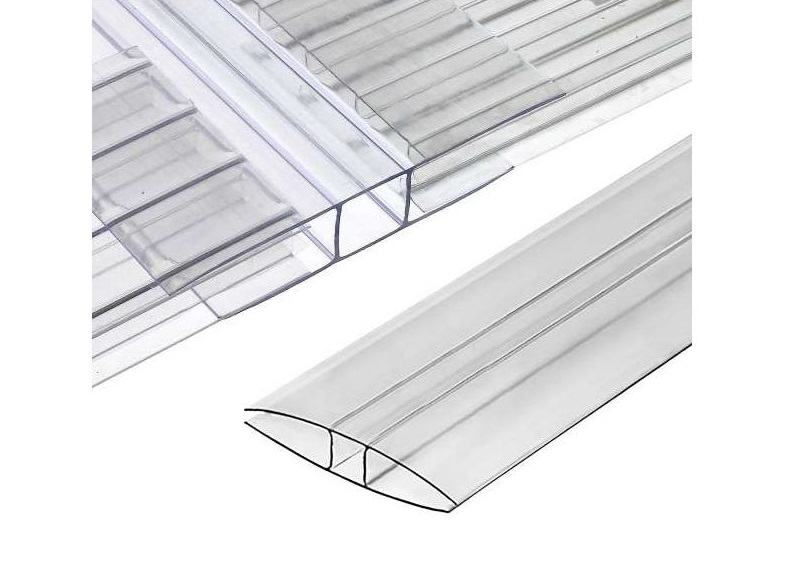
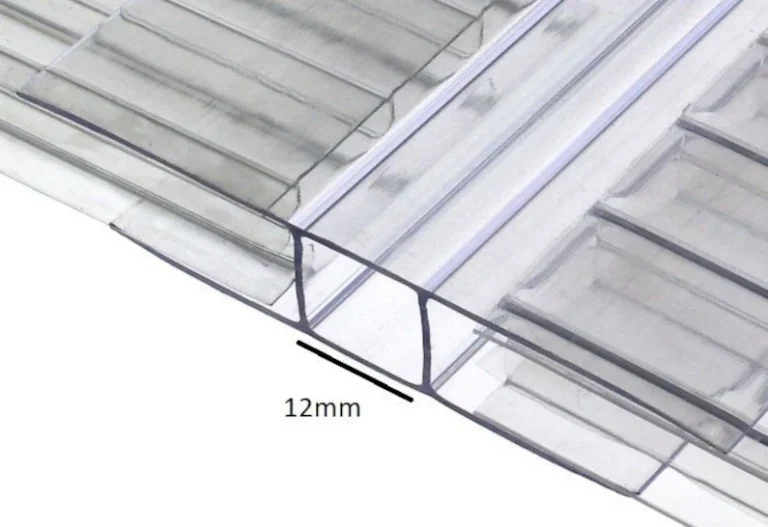
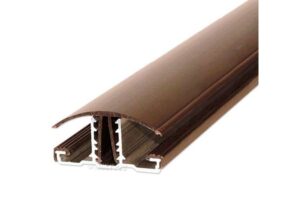
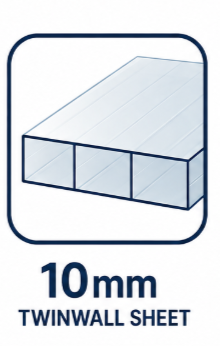
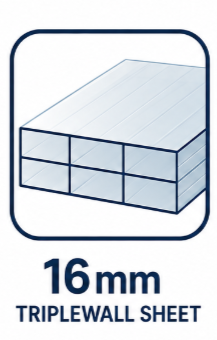
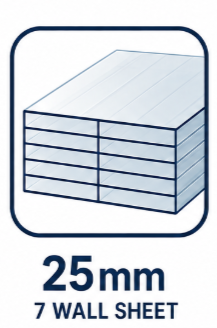
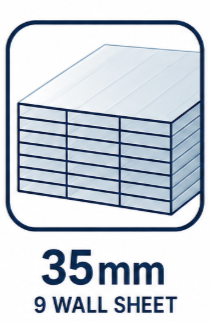
Our clear polycarbonate H-sections come in three sizes: 4/6mm, 8/10mm and 16mm. They suit twinwall and thinner multiwall only. The manufacturer says an H profile is impractical for thick multiwall, so for 25, 32 and 35mm sheets use a snapdown rafter bar or self-supporting bar instead. Match the H-section to your exact sheet thickness, as the profile is sized for a tight fit.
Yes, but only for light duty. An H-section is a single clear profile that joins two sheets edge to edge; there is no base, cap or gasket. It is not self-supporting, so every joint must sit on a timber purlin and be sealed with silicone. That suits polytunnels, cold frames and small purlin roofs. For a lean-to or conservatory, choose a glazing bar.
They suit both, but polytunnels are the obvious use. The H-section is flexible enough to follow a polytunnel arch, which a rigid bar cannot do, so it suits tunnels and cold frames glazed in 4 to 10mm twinwall. On a flat or pitched roof it works too, provided each joint sits on a timber purlin and is sealed with silicone.
The H-section is sized for a snug fit on its stated thickness, so the sheet should push in firmly with no play. That grip alone does not make the joint watertight, though. Run silicone along the joint where sheet meets profile, and support the whole length on a timber purlin so it cannot flex. Choose the profile that matches your sheet exactly.
Yes. The profile gets wider as the sheet gets thicker: 65mm for the 4/6mm section, 70mm for 8/10mm and 90mm for 16mm. The extra width gives the thicker sheet a bigger channel to sit in. Allow for that width when planning purlin positions and sheet sizes, because the H-section covers part of each sheet edge and needs a purlin beneath the full joint.